


Teletherapy Privacy Review: What to Check First

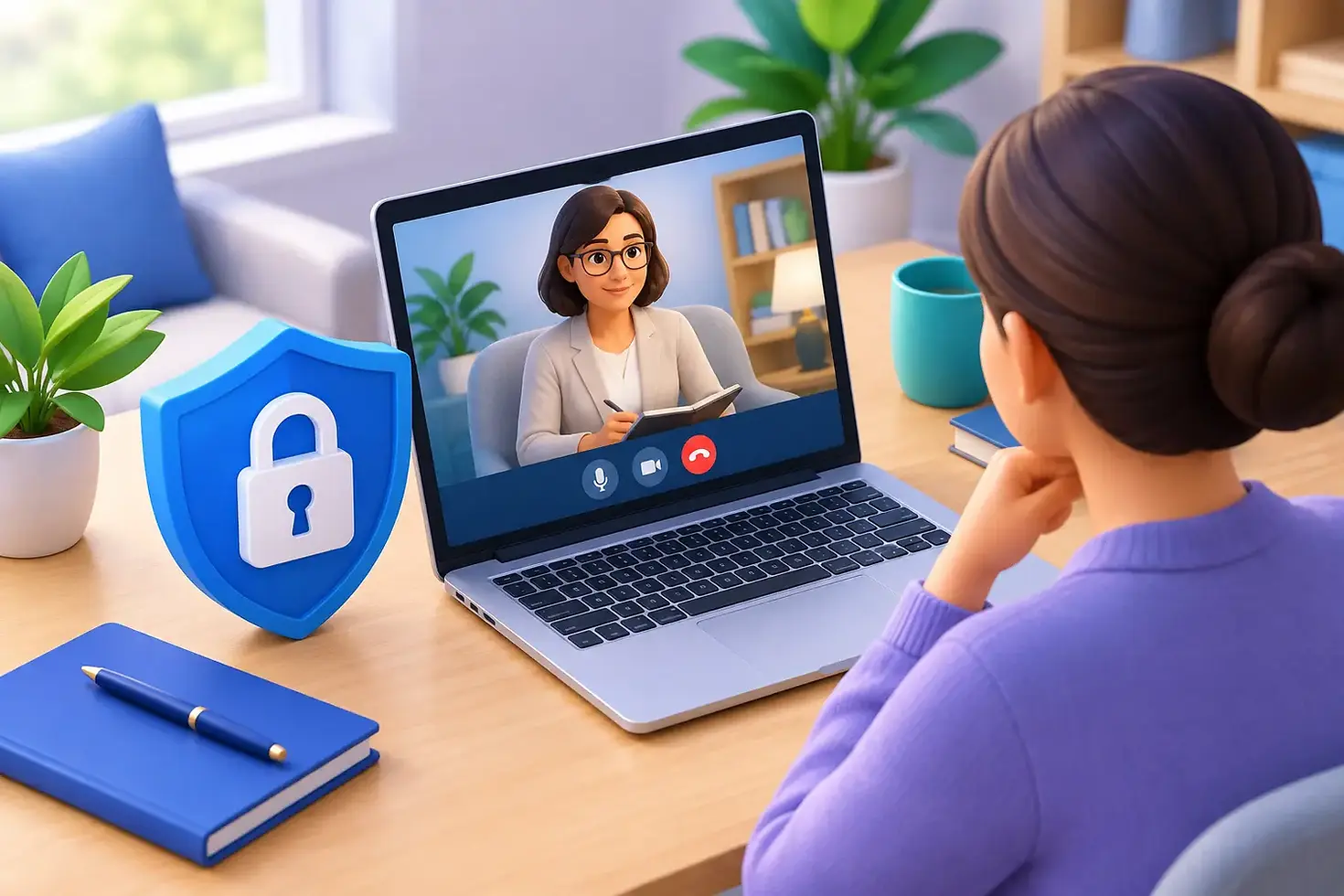
A teletherapy privacy review should begin before the first appointment, not after a sensitive conversation has already taken place. Online therapy can make professional support more accessible for busy adults, parents, students, expatriates, and people living outside major cities. Yet the comfort of speaking from home only helps when you know who can access your information, how the session is delivered, and what steps protect your confidentiality.
Privacy concerns are common, particularly for people seeking care for the first time or managing mental health in a workplace, family, or community where stigma remains a concern. Asking direct questions about privacy is not difficult or distrustful. It is a reasonable part of choosing a qualified mental health provider.
What Privacy Means in Teletherapy
Privacy in teletherapy is broader than whether someone can overhear your appointment. It includes the confidentiality of what you discuss with your practitioner, the security of the video platform, the way personal records are stored, and the clinic's procedures for communicating with you outside sessions.
A professional provider should explain how your information will be collected, used, stored, and protected. They should also explain the limits of confidentiality before therapy begins. In most clinical settings, information is kept private, but there can be exceptions when there is a serious and immediate risk of harm, suspected abuse or neglect, or a legal requirement to disclose information. The details may vary according to local laws and professional obligations, so it is appropriate to ask for a clear explanation.
Privacy also involves choice. You should understand whether a session is recorded, whether you may decline recording, how appointment reminders are sent, and whether a family member may participate in part of a session. None of these should be left unclear.
A Teletherapy Privacy Review Before You Book
The quality of a teletherapy service is not determined by technology alone. A familiar video app does not necessarily mean a clinical service has appropriate safeguards. Your review should look at the provider, the platform, the environment, and the communication process together.
Confirm the clinician's credentials and clinical setting
Start by confirming that you are working with an appropriately qualified mental health professional. A licensed psychiatrist, psychologist, counselor, or psychotherapist should be able to explain their professional role, relevant training, and the scope of care they provide. This matters for privacy because regulated professionals have ethical and legal responsibilities around confidentiality, documentation, consent, and clinical boundaries.
Ask whether the service is provided through an established clinic or solely through an individual online profile. A clinic should have a privacy policy, consent procedures, secure record-management practices, and a clear route for raising concerns. It should also tell you how to contact the clinic if a technical issue interrupts a session or you need support between appointments.
For children and adolescents, privacy requires additional care. Parents or guardians may need to consent to treatment, while young people also need an age-appropriate explanation of what may remain private between them and their clinician. A thoughtful provider will discuss this balance openly rather than making assumptions.
Ask how the video session is protected
You do not need to become a technology expert, but you should know the basics. Ask which platform will be used and whether the clinic uses a private meeting link, waiting room, password, or other access controls. A session link should not be openly shared or reused in a way that allows unintended people to enter.
It is also reasonable to ask whether sessions are recorded. Many clinicians do not record therapy appointments as part of ordinary care. If recording is proposed for supervision, training, assessment, or another purpose, you should be told why it is needed, who will view it, how long it will be retained, and whether you can refuse without affecting your access to care.
Security is not absolute. Internet connections fail, devices can be lost, and no digital system can promise zero risk. What matters is whether the provider takes proportionate, professional steps to reduce risk and has a clear process when something goes wrong.
Review how your records and messages are handled
Therapy notes, intake forms, assessments, prescriptions, payment details, and messages may all contain sensitive information. Ask how these records are stored and who within the clinic can access them. In an integrated care setting, limited information may need to be shared among members of your treatment team to coordinate care. This can be helpful, especially when psychiatric, psychological, and counseling support are involved, but you should understand how coordination works.
Clarify how the clinic communicates with you. Email and text messages are convenient, but appointment reminders should be discreet and should not reveal more personal detail than necessary. If you share a phone, computer, or email account with someone else, let the clinic know your preferred method of contact. A simple adjustment, such as neutral appointment wording or using a specific email address, can make a meaningful difference.
Your Home Environment Is Part of Privacy
A secure platform cannot prevent someone in the next room from hearing you. Before your session, choose the most private location available. A closed room is ideal, but privacy sometimes requires practical alternatives such as sitting in a parked car, using a quiet outdoor space with a stable connection, or scheduling during a time when others are away.
Headphones can reduce the chance of others hearing your clinician. Position your screen away from doors or windows, turn off smart speakers if possible, and avoid shared computers that save passwords or browser history. If you are concerned that someone may monitor your device or internet use, tell your clinician in a safe way. They can help you consider options that do not increase risk.
Complete privacy at home is not always possible. This does not mean teletherapy is unsuitable. It may mean a shorter check-in, a different appointment time, an in-person session, or another arrangement is more appropriate. Good care should adapt to your circumstances rather than expect you to manage a difficult situation alone.
Questions Worth Asking at the First Session
A trustworthy provider will welcome privacy questions. You might ask: How do you protect my records? Who can access information about my care? Are video sessions recorded? What happens if our connection is interrupted? How will you contact me outside appointments? What are the limits of confidentiality?
If you are receiving care across borders or while traveling, ask whether the clinician can provide teletherapy where you are physically located at the time of the appointment. Professional licensing, emergency procedures, and privacy requirements can differ by location. You should also provide an emergency contact and your current location when requested, particularly if you are experiencing significant distress or safety concerns.
When Teletherapy May Need a Different Approach
Teletherapy can be appropriate for many concerns, including anxiety, depression, stress, relationship difficulties, parenting challenges, and ongoing psychological support. However, it may not be the best standalone option when a person is in immediate danger, experiencing a severe mental health crisis, unable to find a private setting, or needs a physical examination or urgent medication review.
In those situations, an in-person assessment, emergency support, or a blended plan may offer safer care. The right choice depends on your clinical needs, privacy situation, access to technology, and comfort with online communication. There is no need to force teletherapy to fit if another format would help you feel safer and more supported.
At RE:Life Mental Health Clinic, online care is approached with the same respect for confidentiality, clinical standards, and individual needs as in-person care. Clients can discuss their concerns about privacy, language, family involvement, and the right treatment format before beginning.
Seeking support should not require you to surrender control over personal information. A careful teletherapy privacy review gives you the confidence to ask questions, set reasonable boundaries, and begin care with a provider who treats discretion as part of the therapeutic relationship.


Comments