


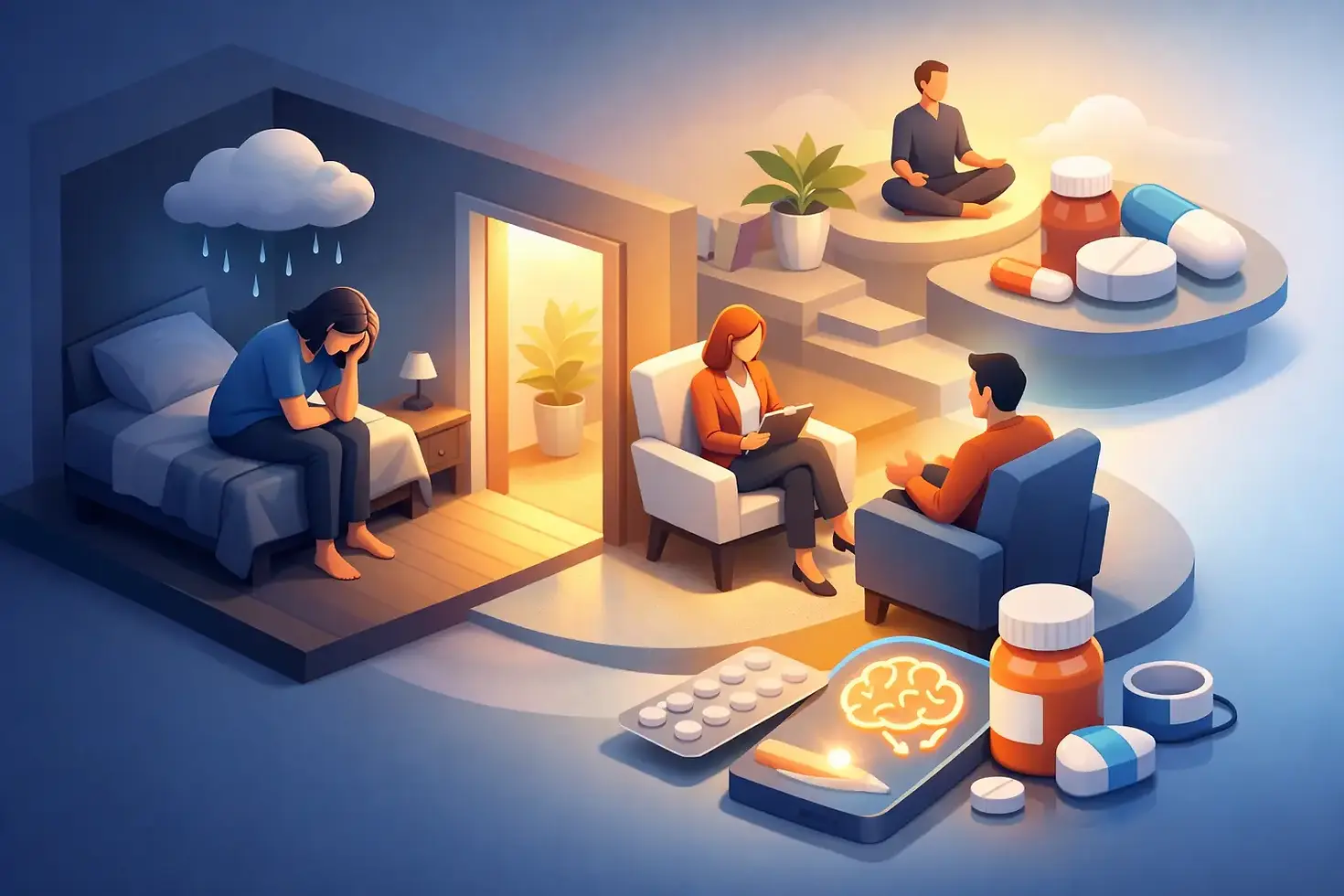
Depression Treatment Without Hospitalization

For many people, the hardest part of seeking help is not admitting they are struggling. It is the fear of what happens next. When someone hears the word depression, they may immediately picture being admitted to a hospital, losing privacy, or having their life put on hold. In reality, depression treatment without hospitalization is often possible, appropriate, and effective.
That does not mean depression should be taken lightly. It means treatment should match the severity of symptoms, the level of risk, and the person’s daily functioning. Many adults, teenagers, and older individuals can receive meaningful care through outpatient services while continuing to live at home, work, attend school, and stay connected to family support.
When depression treatment without hospitalization is appropriate
Hospitalization can be necessary in some situations, particularly when there is immediate danger to the person’s safety or they are unable to care for themselves. But not every depressive episode requires that level of intervention. A careful mental health assessment helps determine what is clinically appropriate.
Outpatient care is often suitable when a person is experiencing persistent low mood, loss of interest, fatigue, anxiety, sleep disturbance, irritability, difficulty concentrating, or changes in appetite, but is still able to participate in treatment and remain safe outside a hospital setting. This can apply to mild, moderate, and in some cases severe depression, depending on the individual picture.
The key point is that treatment decisions should not be based on fear or assumptions. They should be based on risk assessment, diagnosis, medical history, current symptoms, family or social support, and how much the depression is affecting daily life.
What non-hospital treatment usually includes
Depression rarely improves from willpower alone. Effective treatment usually combines clinical structure with a realistic understanding of the person’s emotional, psychological, and physical needs.
Psychiatric evaluation and diagnosis
The first step is often a thorough psychiatric or psychological assessment. This helps clarify whether the symptoms reflect major depressive disorder, adjustment-related depression, burnout, grief, trauma-related symptoms, bipolar depression, or another condition that may look similar on the surface.
This step matters because treatment for depression is not one-size-fits-all. Someone with low mood linked to unresolved trauma may need a different care plan from someone whose symptoms are driven by a biological depressive disorder or by severe workplace stress.
Psychotherapy
Talk therapy is one of the most common forms of depression treatment without hospitalization. Depending on the person’s needs, therapy may focus on thought patterns, emotional regulation, relationship stress, unresolved trauma, self-esteem, or behavioral changes that help restore daily functioning.
For some people, therapy works best as a short-term structured intervention. For others, especially those with long-standing patterns of depression, deeper psychotherapy may be more useful. Neither approach is automatically better. It depends on the person’s goals, symptoms, and capacity for emotional work at that stage.
Medication management
Medication can be an important part of treatment when symptoms are moderate to severe, persistent, or interfering significantly with sleep, concentration, appetite, motivation, or safety. Antidepressants are not necessary for everyone, and they are not a shortcut. They are one clinical tool among several.
Some people benefit greatly from medication, especially when depression has a strong biological component. Others may prefer to begin with therapy and review medication later if progress is limited. A licensed psychiatrist can explain expected benefits, side effects, timing, and what to monitor over time.
Counseling and practical support
Depression often affects routines before people realize how much they have slipped. Sleep becomes irregular. Meals get skipped. Work performance changes. Social withdrawal increases. Counseling can help rebuild structure, identify stressors, and set realistic treatment goals without overwhelming the person.
This practical layer of care is often underestimated. People do not only need insight. They need a workable plan for getting through the week.
A personalized approach matters
Depression is a broad term, but the lived experience differs widely. A working parent who is functioning outwardly but crying every night may need a different support plan from a university student who cannot get out of bed, or an older adult whose depression is mixed with grief, isolation, and medical illness.
This is why multidisciplinary care can be especially valuable. In a setting where psychiatric services, psychology, counseling, psychotherapy, and supportive wellness approaches are available together, treatment can be adjusted more thoughtfully over time. One person may need medication and cognitive therapy. Another may need trauma-focused work, family involvement, and supportive body-based or calming interventions.
At RE:Life Mental Health Clinic, this kind of integrated care is designed to reduce the gap between clinical treatment and the person’s broader recovery needs, while maintaining privacy and professional oversight.
Can holistic therapies help?
They can help, but they should be understood clearly. Holistic approaches are best used as part of a wider treatment plan, not as a replacement for proper assessment when someone may have clinical depression.
For example, sound-based relaxation work, equine-assisted experiences, or other supportive wellness modalities may reduce stress, improve emotional regulation, and help some individuals reconnect with themselves in ways that feel less verbal or less clinical. That can be meaningful, especially for clients who feel shut down, emotionally disconnected, or resistant to conventional talk therapy.
The trade-off is that holistic support alone may not be enough for moderate or severe depression, suicidal thinking, psychotic symptoms, or depression linked to complex psychiatric conditions. In those cases, medical and psychological oversight remains essential. A trustworthy clinic should be clear about that.
What to expect from outpatient care
One reason people avoid treatment is that they imagine a dramatic process. In practice, outpatient depression care is usually more structured and private than people expect.
It may begin with an initial consultation, followed by a treatment plan that includes regular therapy sessions, psychiatric review if needed, and symptom monitoring over time. Some clients attend weekly therapy. Others may start more frequently during a difficult period and taper as they stabilize. Online sessions can also be appropriate for many people, especially those balancing work, caregiving, or living abroad.
Progress is not always linear. A person may feel better for two weeks and then have a setback after a conflict, loss, or work pressure spike. That does not mean treatment has failed. It usually means the care plan needs to be adjusted with attention and patience.
Signs that a higher level of care may be needed
A discussion about depression treatment without hospitalization should also be honest about limits. Outpatient care is not the right fit for every situation.
Hospital-based treatment or emergency evaluation may be necessary if someone has active suicidal intent, cannot guarantee their own safety, is severely self-neglecting, is experiencing psychosis, or is so impaired that basic functioning has broken down. In those moments, a higher level of care is not a punishment. It is a safety measure.
This is why proper assessment matters so much. Good mental health care should neither over-hospitalize people out of caution nor under-respond to serious risk. The goal is the least restrictive and most clinically safe option.
For families and loved ones
Families often ask whether helping at home means they should simply watch and wait. Usually, the answer is no. Depression can deepen quietly, especially in adolescents, high-functioning adults, and older individuals who minimize their symptoms.
Supportive family involvement can make outpatient treatment more effective, but loved ones should not be asked to act as clinicians. Their role is better focused on noticing changes, encouraging treatment attendance, reducing judgment, and helping create a stable environment. When appropriate, family sessions can also help improve communication and reduce confusion around what the person is experiencing.
Taking the first step without panic
If you have been avoiding care because you are afraid treatment will immediately lead to hospitalization, it helps to know that this is not how most depression care begins. Most people start with an assessment, a conversation, and a plan. The aim is to understand what you are facing and recommend the level of support that actually fits.
Private outpatient treatment can offer something many people need at the start: discretion, clinical clarity, and room to ask questions without pressure. Whether treatment involves therapy, medication, supportive counseling, or a more holistic combination, the right plan is the one that is safe, realistic, and tailored to the person rather than the diagnosis alone.
Getting help does not have to mean stepping away from your life completely. Sometimes it means building enough support around you that life becomes manageable again, one well-guided step at a time.


Comments